
An Echo in the Silence
2025-Hitler's Germany won World War II, no jazz, no color, no love unapproved. Only obedience, hunger, and fear.

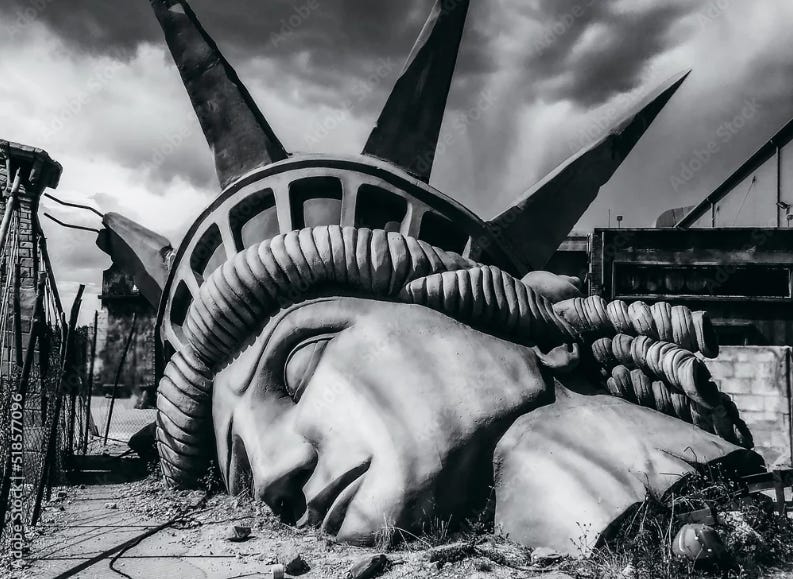
The Year is 2025, but the World is Not Your Own
The air smells of disinfectant and coal smoke, sharp and metallic, like a hospital ward without patients. Breakfast is the same as yesterday: boiled potatoes, a gray sausage, bread so coarse it grinds your teeth. Coffee does not exist here; chicory brew stains the tongue with bitterness.
The city sounds are wrong. No sound of music sneaks from a basement club, no laughter drifts from a corner café. Instead: the precise chime of state bell towers, the hum of electric trams, the synchronized echo of boots on pavement. Silence fills the spaces where spontaneity once lived.
Colors are missing, too. Clothes are field-gray, brown, beige, functional, and obedient. A red scarf, a painted nail, a splash of defiance could cost a life. The streets look clean, but it is the sterilized cleanliness of control, not of joy.
This is not the 2025 you know. This is Germania.
The Seasons of Germania
Summer presses down heavily, heat trapped between avenues of concrete and steel. No ice-cream carts, no watermelon rinds on children’s fingers. Lukewarm, rationed mineral water is handed out at state kiosks.
Autumn brings no harvest festivals. No pumpkins, no marigolds, no altars of remembrance. Leaves turn one obedient brown. Parades march, but they are not celebrations; they are reminders. Brass. Boots. Instruction.
Winter is a cage of silence. Snow falls gray with ash from the plants that power the capital. No Christmas markets, no Hanukkah candles, no midnight Mass, no Ramadan, no Bada Din. Pine is reserved for lumber, not memory. Families huddle under quotas of heat, eating potatoes and cabbage stew in practiced quiet.
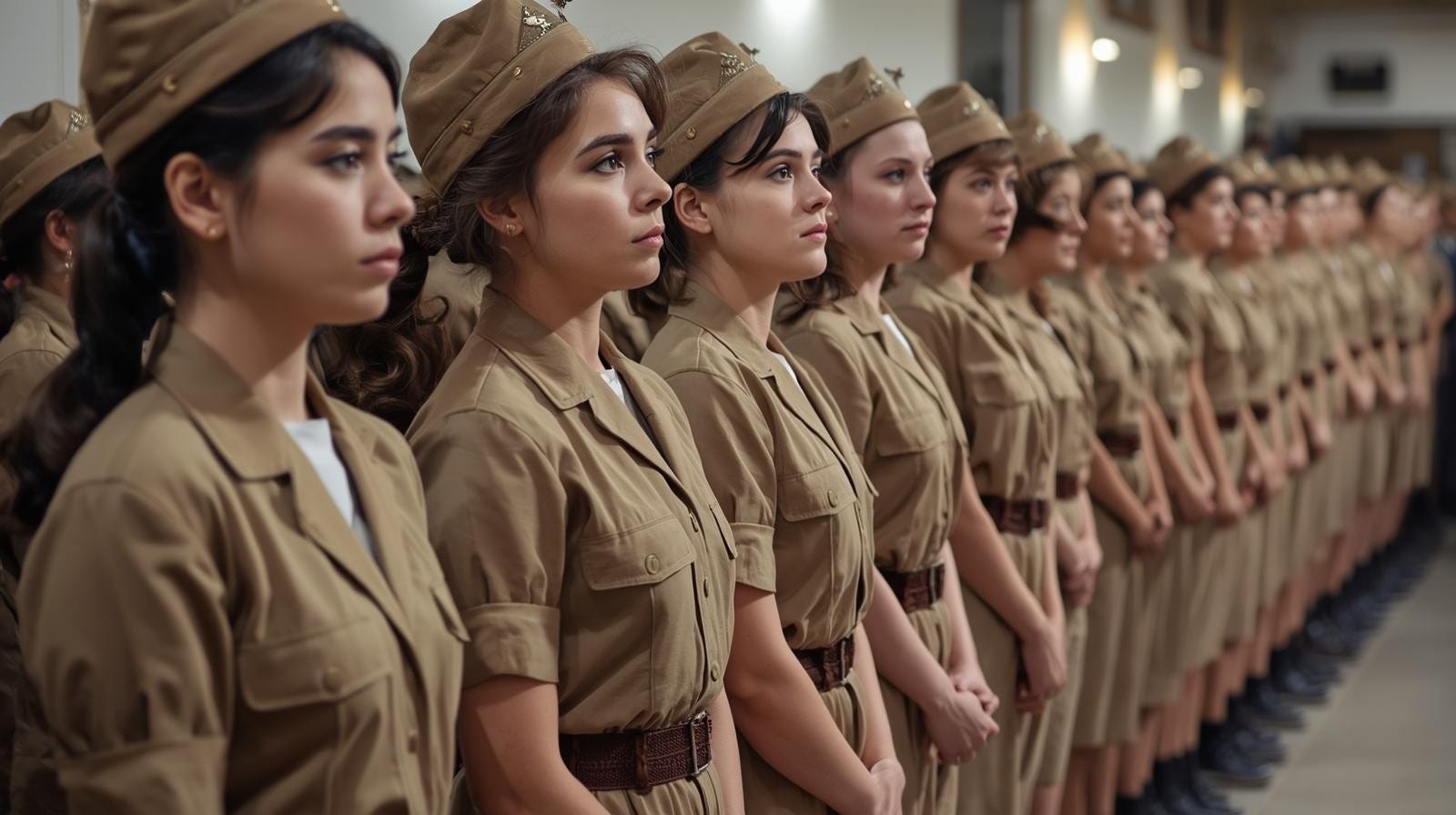
Spring tries to arrive, but even blossoms have been rationalized. Parks are geometry. Seeds deemed “unnecessary” never sprout. Children do not chase kites; they march in uniforms, carrying flags. Marriage contracts are signed while childhood still lingers in a girl’s face. By her early teens, the State declares her “ready” to serve its future, her body reduced to an instrument of policy.
The seasons pass, but they are not alive. They are managed.
Germania, 2025
Berlin is a memory, a censored footnote. You live in Germania, a monument carved from granite and fear. Albert Speer’s vision was made real: colossal avenues mocking the smallness of human legs stretch toward the Great Hall, its dome a concrete mountain. It does not inspire awe; it enforces submission.
There are no monuments of memory, only monuments of power. The Lincoln Memorial was demolished, its marble repurposed for boulevards. The Arc de Triomphe is a ruin. The Taj Mahal in rubble, dismissed as “decadence.” What remains are vast halls and arches designed to dwarf the individual into silence.
The absences are everywhere. No jazz on a corner, no tabla in a marketplace, no gospel choir lifting a Sunday morning. No tacos sizzling on a griddle, no curry simmering in a kitchen, no falafel wrapped for a hurried lunch. No graffiti in rebellion, no lovers kissing in a park, no children chasing ice-cream trucks. No festivals of light, no carnivals of color, and no spontaneous joy.
The world hums, but it does not sing.
There is no rock & roll, no Beatles, no Stones, no Hendrix setting fire to a stage. No punk thrashing in defiance, no grunge, no rap & hip-hop born on city blocks, no children dreaming of being pop stars belting anthems into hairbrush microphones. Instead, the soundtrack is uniform: brass bands in rigid unison, folk songs rewritten into hymns, choirs that rise and fall with mechanical precision. Even silence is different here, not peace, but suppression, a gap where improvisation and laughter should live.
Even the air betrays what is gone. No spices curling from immigrant kitchens, no roasted chestnuts in winter, no sweet smoke of barbecues drifting across summer blocks. The smells are industrial, reeking of coal ash, boiled meats, and chemicals. Survival, not delight.
You pass the Ministry of Public Enlightenment and Propaganda, its facades adorned not with art but with reliefs of muscular figures, stone faces locked on a future you are forced to share. The museums are gone. The Louvre stands gutted, its halls emptied of the Mona Lisa, of Winged Victory, of Venus herself. Michelangelo’s David was toppled as “degenerate,” fragments ground into gravel for Party plazas. Van Gogh’s Sunflowers, Picasso’s Guernica, Kahlo’s self-portraits, Basquiat’s furious splashes, destroyed or locked in vaults no citizen will ever see.
Public statues are no longer heroes of freedom, but marble generals and allegories of conquest. The Pietà shattered. Rodin’s Thinker is silenced. Fountains rimmed with faceless stone soldiers, gazes turned skyward as if contemplating eternity on behalf of the State.
There are no galleries to wander, no canvases that make you pause, no installations that provoke discomfort or wonder. Art exists only as propaganda, stripped of ambiguity and humanity.
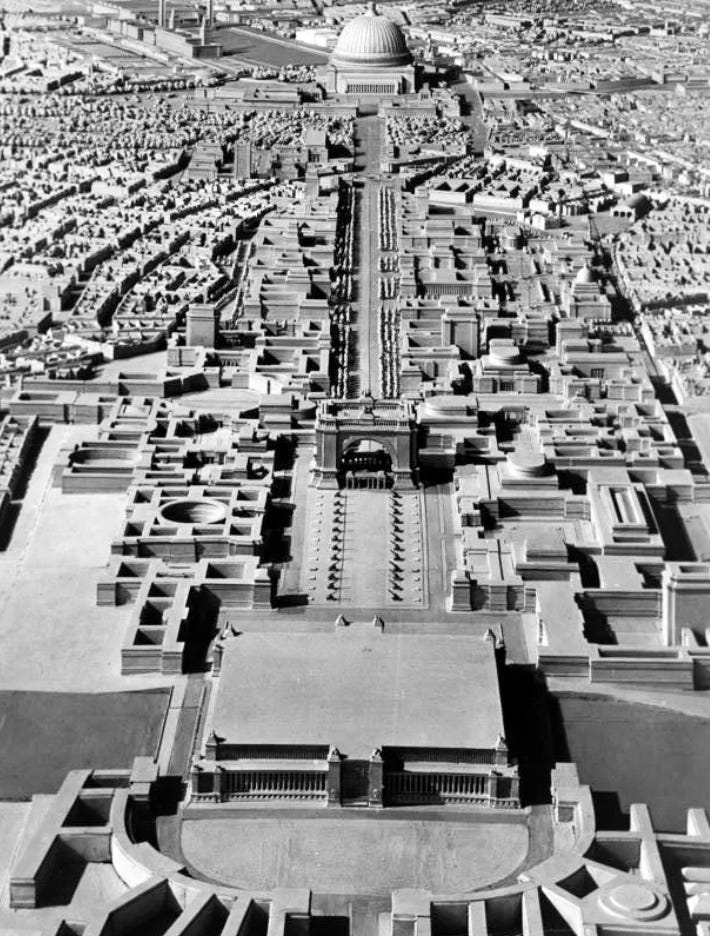
A World Reconstructed in Iron and Oppression
Europe & America
Harlem never blooms with jazz; Mississippi never bends the blues; Liverpool never births the Beatles. Jim Crow endures in the “American Republic,” pulpits silenced, movements murdered. Across the Atlantic, Germania rises in granite and fear, boulevards lined with faceless statues that do not remember, only command. The Slavic East is renamed and repurposed: Lebensraum realized, people starved and worked to death from the Atlantic to the Urals.
The Pacific & Australia
From Hawai‘i to Sydney, the ocean is a chain of garrisons. No leis, no ukuleles, no hula drums, only barbed wire, boots on coral sand, the acrid sting of diesel. Australia is bustling with air bases and mines; bushland and ancient Aboriginal songlines are ground into dust and ore. Tokyo gleams at the empire’s core: neon without chaos; shrines stripped to altars of loyalty; ramen stalls and festivals erased.
South America
Reduced to its resources. The Amazon smolders, orchids replaced by smoke, jaguars by silence. Buenos Aires’ tango halls are padlocked. Rio’s 300-year-old Carnival tradition is outlawed. No samba floats, no sequins, no jubilation-soaked parades. The Andes still stand, but villages echo with machinery, not music.
Africa
Divided and consumed. The rhythms of djembe, the call-and-response of griots, and the blaze of kente cloth are outlawed. Lagos no longer pulses with highlife; Cape Town no longer sings in Kwaito. Markets once alive with spice, fabric, and laughter now echo with orders barked in foreign tongues. Nelson Mandela never walked free; apartheid metastasized into the global norm. A continent stripped of voices, its wealth funneled elsewhere.
By 2025, the Axis alliance has soured. A cold, bitter standoff simmers between Germania and Tokyo. They spy, posture, and strip other parts of the earth in parallel. The world holds its breath, not for one tyrant, but two.
Life Under the Reich: The Cage of Modernity
The world is modern, but its technology serves control, not liberation. Fiber-optic cables, born from military labs, feed Das Netz, a closed, monitored intranet. There are no home computers; private thought requires permission. You access terminals in public Information Halls. Your queries are logged. Your time, measured. History, polished into a shining lie.
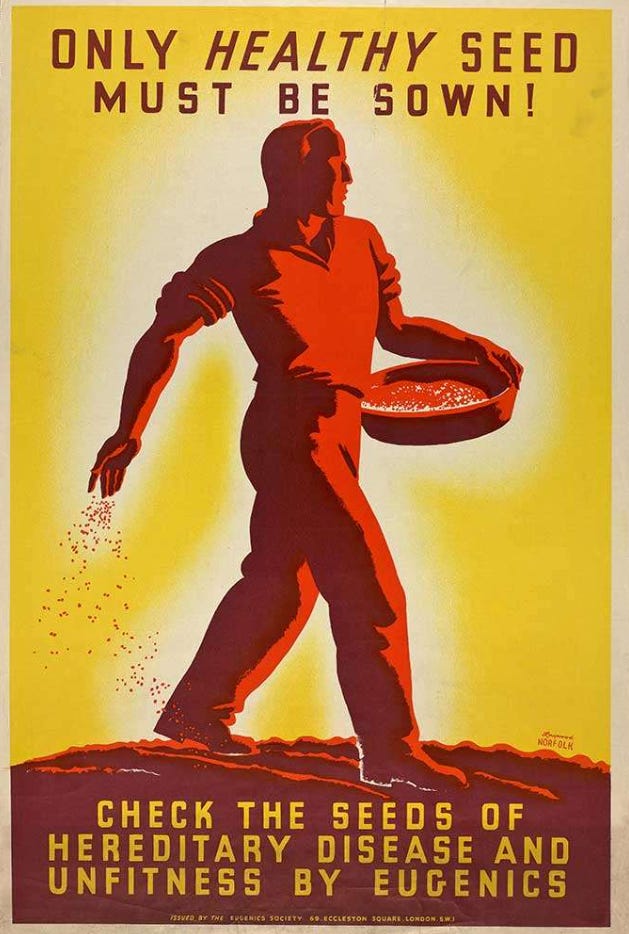
Your identity is not just a name; it is a genetic card. From birth, your DNA is sequenced; your “purity score” dictates school, work, travel, and marriage. A hereditary illness or a score deemed sub-optimal means sterilization, your line quietly ended. The sterile, “scientific” application of a genocidal dream.
Education Under the Reich
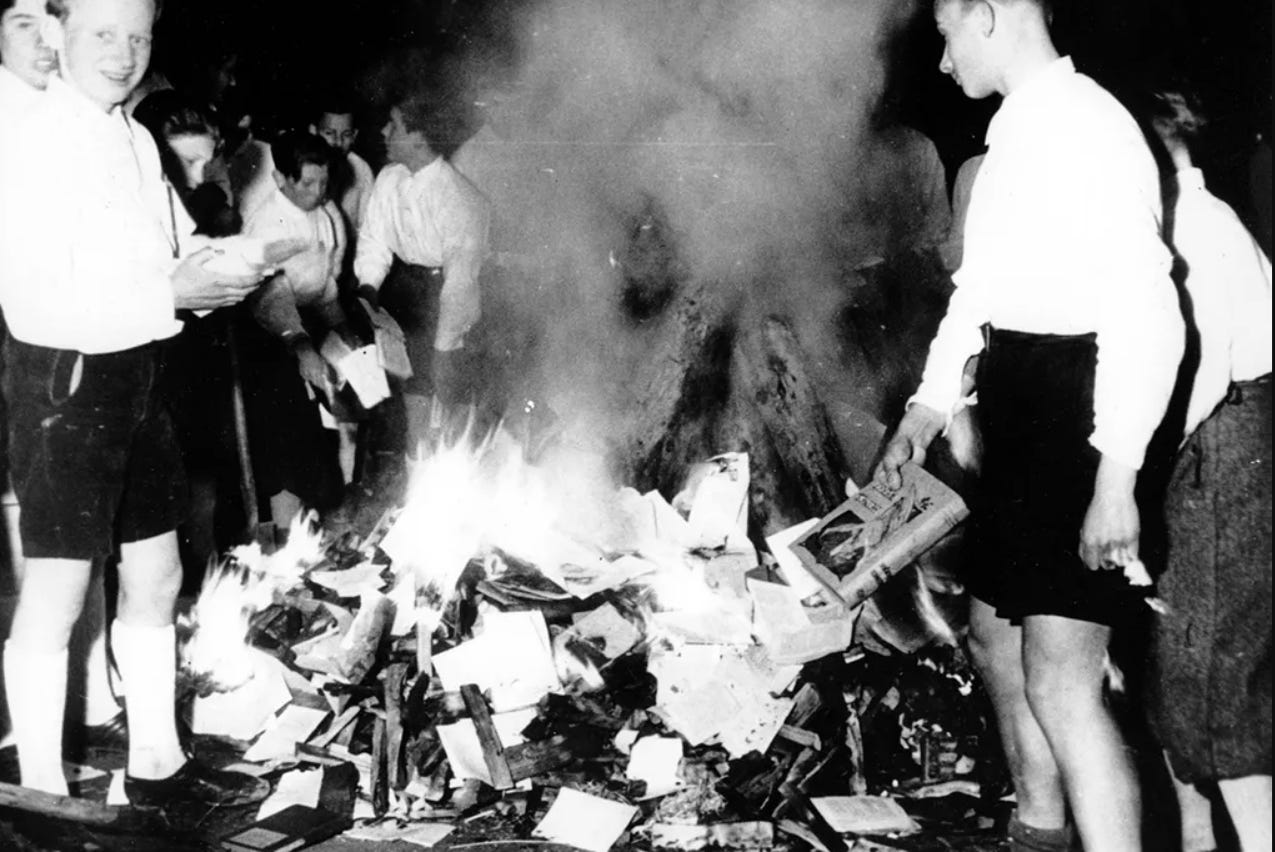
Classrooms are immaculate and orderly. Children learn ideology before arithmetic. History begins and ends with victory myths; words like Holocaust are never spoken. The compliant and quick are streamed to Party academies; the questioning and the slow are sent to labor schools. Books continued to be burned and rationed. Philosophy is poison. Critical thought is treason
Faith Under the Reich
Religion exists, but only as an echo. The German Christian movement replaces the crucifix with emblems of the state; altars are draped in banners. Sermons are no longer about grace or mercy; they are weekly pledges to the Führer. Cathedrals stand, but stained-glass saints are smashed, replaced with symbols of conquest. It no longer feels like a holy place; it smells of wax, dust, and discipline.
But faith is harder to kill. In a farmhouse cellar, an old Bible is read by candlelight, pages smudged by hidden hands. In the back room of a bakery, a rabbi whispers ancient prayers, careful that the cadence of Hebrew does not slip into the street. A Muslim family unrolls a rug in silence, bowing not toward Mecca but toward hope itself.
Hallelujah is whispered, not shouted, in celebration and joy. Where bells once called whole towns to worship, only memory carries their chime. Faith’s body remains, draped in state banners. Its soul survives in fragments, in whispers, in the unshakable defiance of belief.
The Void of Pleasure
Travel is for indoctrination, not discovery. Permits through Kraft durch Freude grant loyal workers state holidays at grim Baltic resorts: calisthenics at dawn, lectures on racial hygiene by afternoon, patriotic rallies by night.
Luxury thrives only for the ruling class, private alpine estates, confiscated delicacies, and forbidden forests.
Food itself is monochrome. Sealed borders and exterminated cultures mean no curry, no sushi, no pho, no tacos, and no kitchen passports. The national diet is the Reichskartoffel, sausage, and coarse bread. Spices are a privilege for the Party. Nutrition without joy.
All the small, unplanned pleasures, the midnight street taco, the music festival that runs for days, the road trip that becomes a story, are gone. The world has been drained of its color and its uniqueness.
The Silence of Lost Voices
The Harlem Renaissance never bloomed. Simone de Beauvoir never wrote The Second Sex; feminism never unfolded into waves. Homosexuality remains a death sentence: no Stonewall, no Harvey Milk, no Freddie Mercury commanding a stadium. The ADA never passed; people with disabilities are hidden, institutionalized, and erased. Helen Keller never found her voice, never showed the world that brilliance can live inside silence and darkness.
The libraries are hollow. To Kill a Mockingbird never reached a classroom. Why the Caged Bird Sings was never written. Baldwin never gave us The Fire Next Time. Orwell never warned us with 1984. Morrison never wrote Beloved. Butler never dreamed of Kindred. The novels that could have nurtured empathy, sparked resistance, and opened imagination were reduced to ash.
Cinema is limited to nationalist epics; books are censored into loyalty tests. Even sport is political theater, a showcase of “purity” and dominance. Spielberg never filmed Schindler’s List; the Holocaust itself was erased. No E.T. to remind us of gentleness, no Saving Private Ryan to humanize sacrifice, no Shawshank Redemption to reveal persistence, no Disney or Pixar to spark a child’s wonder.
A world without books and films is not silent. It drones. It conditions. It erases imagination.
The Embers in the Dark
Yet even in the void, sparks catch.
In a Prague cellar, an elder whispers a forbidden lullaby in Czech, a song like a small, defiant prayer. In a segregated Chicago ghetto, the ghost of jazz survives on buckets and bottles, rhythm as code, sorrow as signal.
A doctor in a genetics lab alters a child’s file, a single digit changed from fatal to passing, an act of treason that saves a life. A tiny network of rebels hijacks Cold War tech and broadcasts a few minutes of truth and pirated music into the ether each night, a flare that vanishes before it is traced.
There are bread riots in Houston, silent strikes in São Paulo, and small mutinies in Pacific colonies. The Reich crushes them brutally. But every generation leaves a crack. Oppression can choke freedom for a season or for a century, but never forever. Curiosity is patient, and Humanity waits.
Look Around You
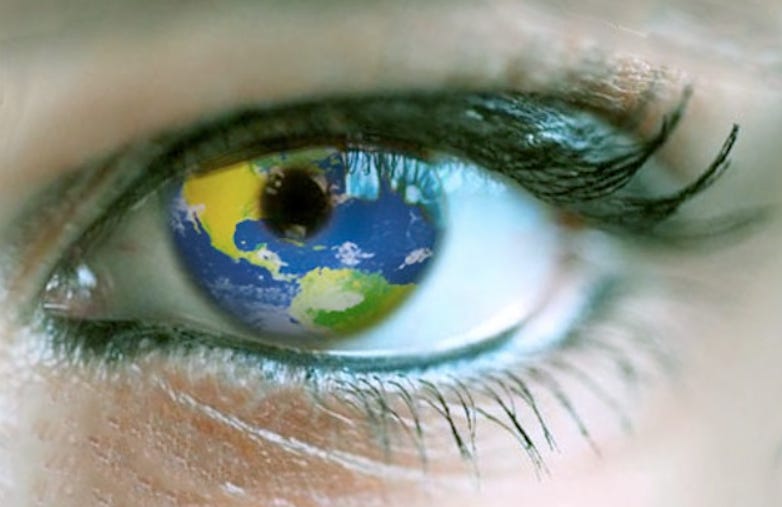
You open your eyes again, and the world is yours.
The air is layered, never sterile: curry bubbling in a neighbor’s kitchen; cinnamon from a café on the corner; charcoal smoke drifting from a backyard grill; exhaust, flowers, rain on warm pavement mingling in a riot no authority could design.
Breakfast is not rationed sameness. Pancakes drenched in syrup, chilaquiles with fresh salsa, croissants still warm from the oven, the flavors of continents, carried by immigrants, travelers, wanderers; a thousand kitchens teaching you joy.
The city is noisy, gloriously so. A busker bends a saxophone on the corner. Teenagers blast hip-hop from a cracked Bluetooth speaker. Church bells argue with mosque calls to prayer. Dogs bark, children squeal, lovers quarrel, and make up. It is imperfect. It is alive.
Color is everywhere. Murals bloom across brick walls. Saris, hijabs, ripped jeans, sequined jackets, no two people dress alike. Street markets spill with fruit the color of jewels. Lovers kiss in parks; kids chase ice-cream trucks; strangers wave across fences.
The world is textured, not polished flat.
This is not a perfect world.
But it is one rich with senses, thick with memory, bursting with possibility.
You are home. Messy. Flawed. Vibrant and Free.
A Plea for the Texture of Life
This is what the world looks like when culture is erased. No music. No art. No freedom to worship, speak, or love differently. Just obedience, silence, fear.
None of us has to like every song on the radio, every mural on a wall, or every protest on the street. But the right to argue, to sing off-key, to dance badly, to pray your own way, to live alongside people who choose differently, that is freedom.
Take those away, and we do not have freedom. We have a gray echo of what could have been. A life stripped of pleasure is not fantasy; for millions, it is the present tense. Ask the woman in Kabul, gasping for her last breath under her burkha after being stoned for the rumor of her infidelity. Ask the child in Pyongyang who has never heard a guitar riff, never swayed to salsa music, only the drone of anthems and state-approved songs.
These are not hypotheticals. They are happening now, one draped in the language of religion, the other under the gaze of a dictator.
Both ruled by the same cold hunger for control.
Authoritarianism rarely arrives with tanks on day one. It comes as subtraction: a book disappears, then a song, then a word. A neighbor becomes an enemy. Safety is offered in exchange for silence.
Cruelty finds a costume.
This is not a call to join a party.
It is a plea to defend the texture of life, the small, messy, beautiful things.
To make space for a dissenting voice, even one you despise.
That is freedom.
To listen to another culture’s music.
To taste another kitchen’s history.
To refuse to look away when anyone’s world is being drained of its color.
Because history is not just what happened.
It is the echo of what could have been
and a warning of what could be again.
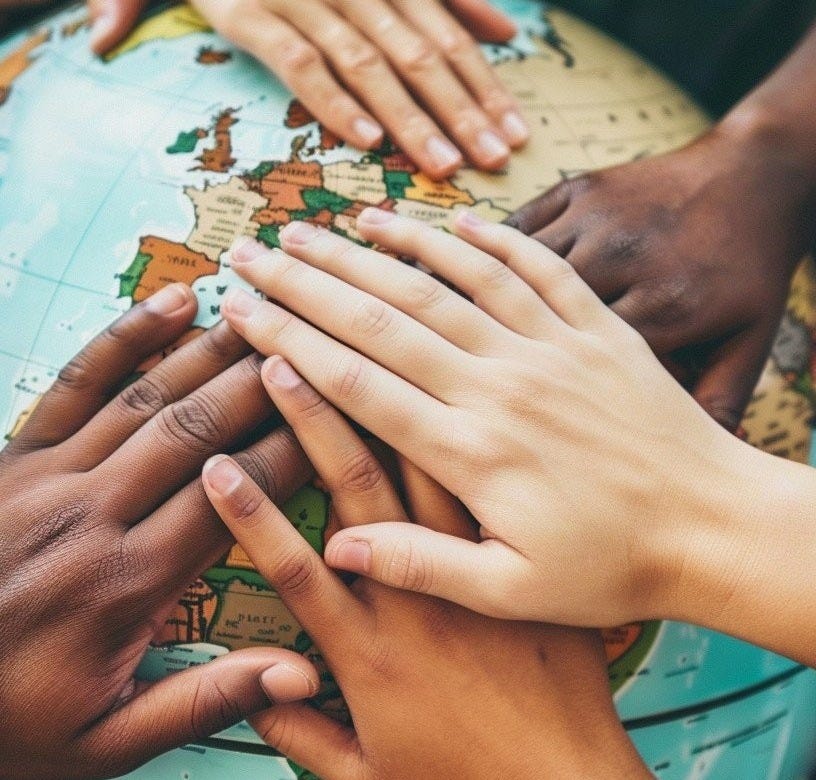
Gutting. Privileged fantasies that so many maintain in which everything that’s taken for granted can not be cancelled. It can. And yes, fear is exhausting. Hope is the most precious nutrient.
What a powerful piece - thank you.